
The screens were
never the hard part.
At DEGIRO, as first UX designer, I took account opening from two days to ten minutes by moving suitability tests, signing and the account check into the flow. At Mobiquity I built the prototype ila Bank’s press team used for one-on-one journalist demos ahead of launch. At NPO I co-led design for the 2025 Luister web launch, part of a platform reaching 1.4M people a week across web and app.


Portfolio
Featured work
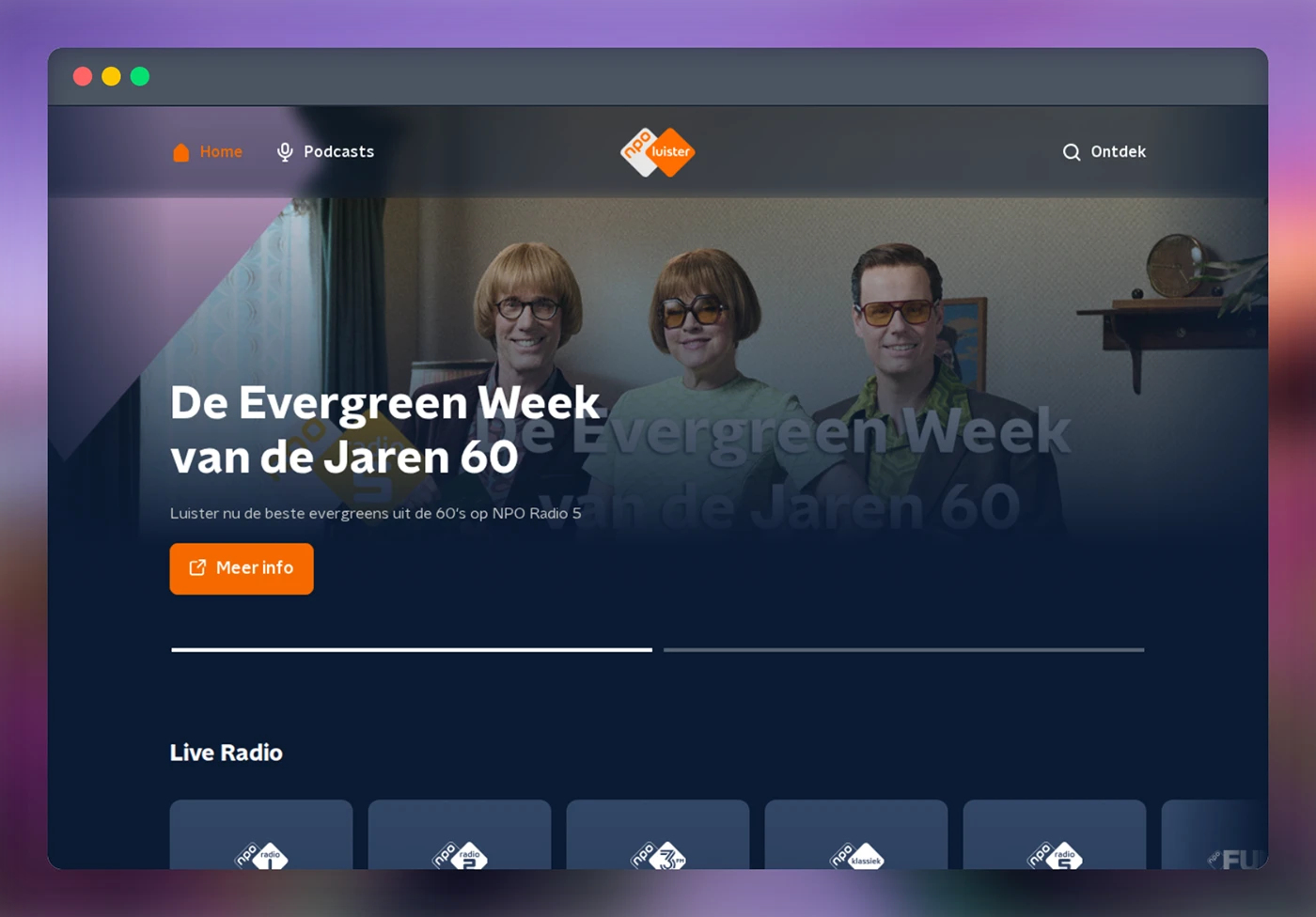
NPO · 2025 · Co-lead design
Six broadcasters, one audio platform, without flattening identities
Unifying live radio and podcasts from separate broadcasters into a single web experience — while each broadcaster kept its own recognisable presence.
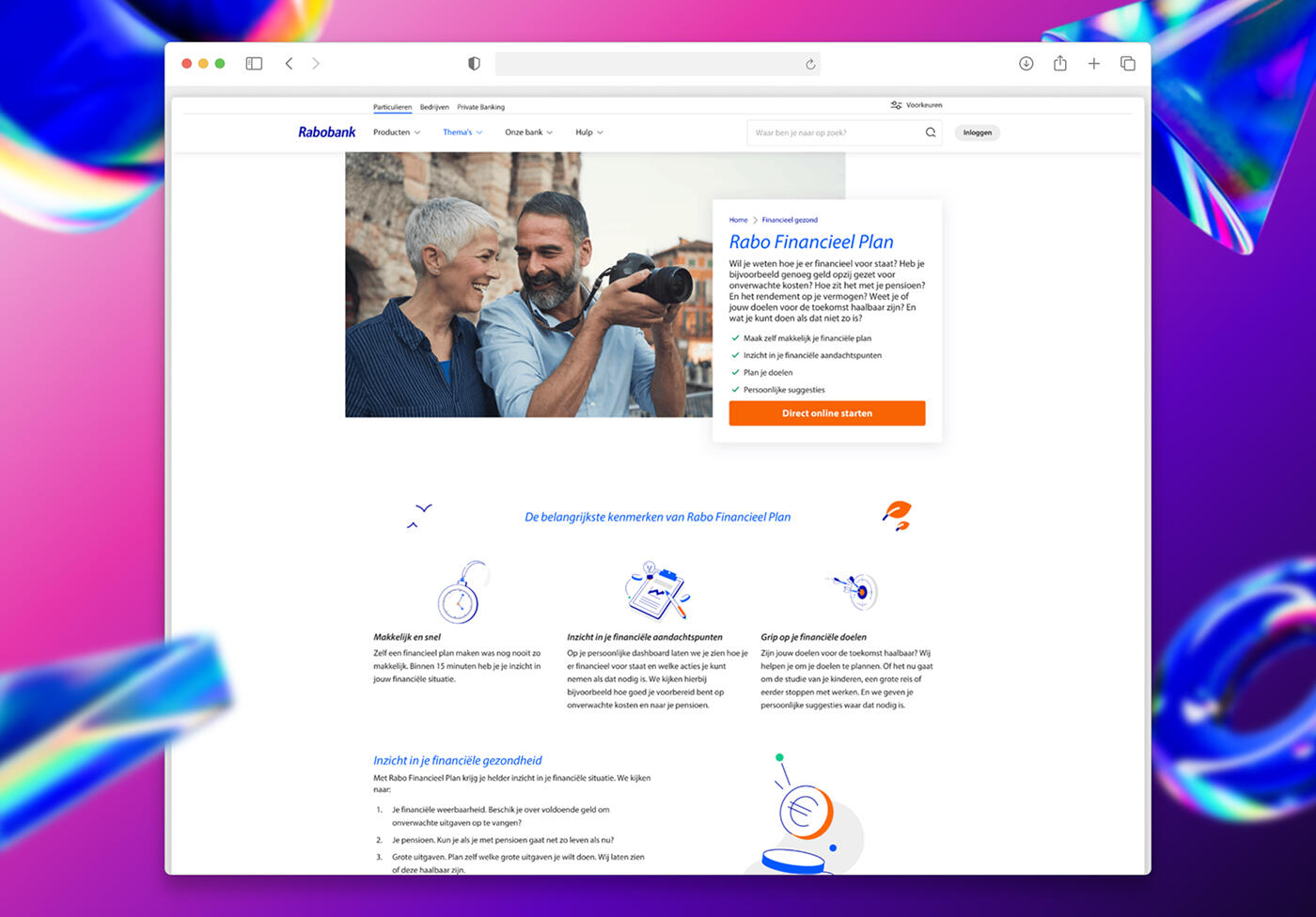
Rabobank Financieel Plan
Rabobank · Project Lead UX
Financial planning for 9M+ customers, with no advisor in the room
Self-service financial planning for retail banking: turning a conversation that normally needs an advisor into something a customer can complete alone, and still trust the outcome.


How I Work
Producing screens got cheap.
Deciding which ones deserve to exist did not.
A working prototype takes an afternoon now. The expensive part is the framing: which problem is worth a quarter of the roadmap, and which constraint is real versus someone's preference. I argue it in terms of scope, effort, and risk — and I stay in it until something is decided.Then I build it myself, including the failure states: a failed transfer, a document that won't validate. These screens are often what decides whether someone trusts and likes the product.

Where I add value
Complex domains
Brokerage, onboarding and KYC, financial planning, public audio. I learn the rules well enough to push back on them — suitability, risk classes, retention, accessibility — because in these products the constraints decide the design, not the other way around.
Design systems as an operating model
The component library is the easy half. The hard half is governance: who owns a pattern, when a team is allowed to deviate, and what happens when design and code drift apart.
Discovery with product and engineering
I'd rather be there when the problem gets framed than receive a brief. From week one: what we're solving, what we're deliberately not solving, and what engineering can realistically ship before the date.
Coaching alongside the work
Where less experienced designers get stuck is rarely the craft. It's defending a decision and its trade-offs to a stakeholder who outranks them. I coach for that while shipping my own work, not in a separate track.

